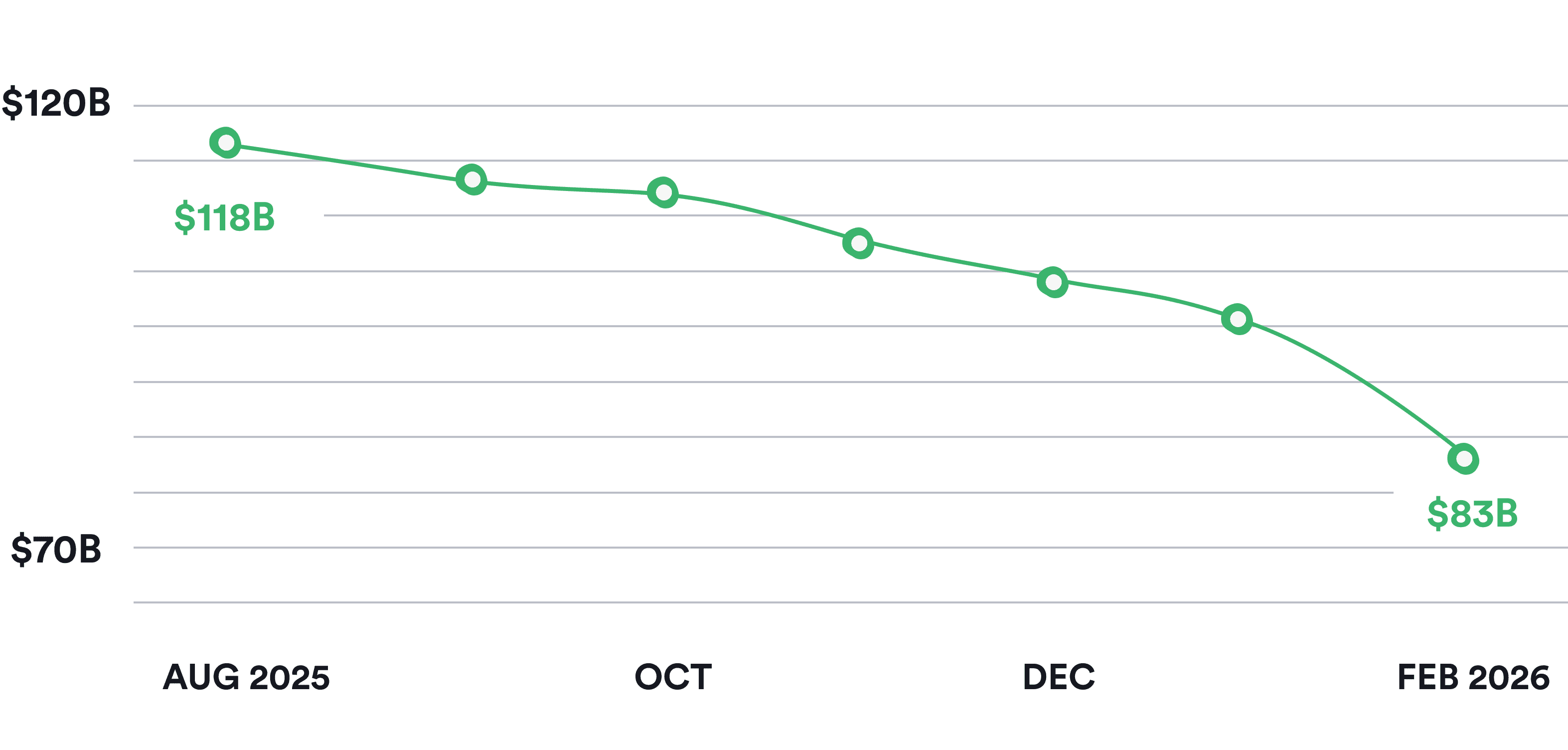
In early February, cloud software stocks saw one of their sharpest sell-offs in years, wiping hundreds of billions off SaaS valuations over a matter of days. ServiceNow, Adobe and Workday all fell around 7%, while Intuit dropped nearly 11%.
The catalyst? A growing consensus that AI is fundamentally disrupting the traditional SaaS model. The seat-based licensing approach that has underpinned software valuations for two decades is being challenged as agentic AI automates workflows that previously required teams of people and specialised software.
This is likely an overcorrection from the market, but the underlying signal is hard to ignore. The market isn't just having a bad week. It's beginning to reprice one of the fundamental assumptions about the future of software. And while stock prices aren't something most digital leaders lose sleep over, the forces driving this sell-off are worth paying attention to: the shifting economics of software, the erosion of platform lock-in, and the speed at which custom alternatives are becoming viable.
IGV (iShares Expanded Tech-Software Sector ETF) Yahoo Finance.
The forces behind the shift
The disruption to the seat-based model is just the most visible part of the shift. Underneath it, several other forces are compounding this pressure.
Globally, we're seeing IT budgets being redirected away from application software and towards AI infrastructure. The cost of frontier AI models continues to fall rapidly, and AI-assisted development has moved from novelty to practical reality. What once required large teams and long timelines can now be prototyped in a fraction of the time.
When AI can replicate vendor capability in days instead of months, the premium you're paying for a platform's feature set becomes harder to justify. The gap between what a platform vendor charges and what a purpose-built solution costs is narrowing. And for a growing number of use cases, that gap has already closed.
The risk of building on someone else's foundation
This isn't an argument against SaaS. Some of the best tools we work with, platforms like Auth0, Braze, Stripe, Sanity and Algolia, are SaaS products. They're excellent at what they do, they expose their capabilities through APIs, and they're designed to work alongside other tools.
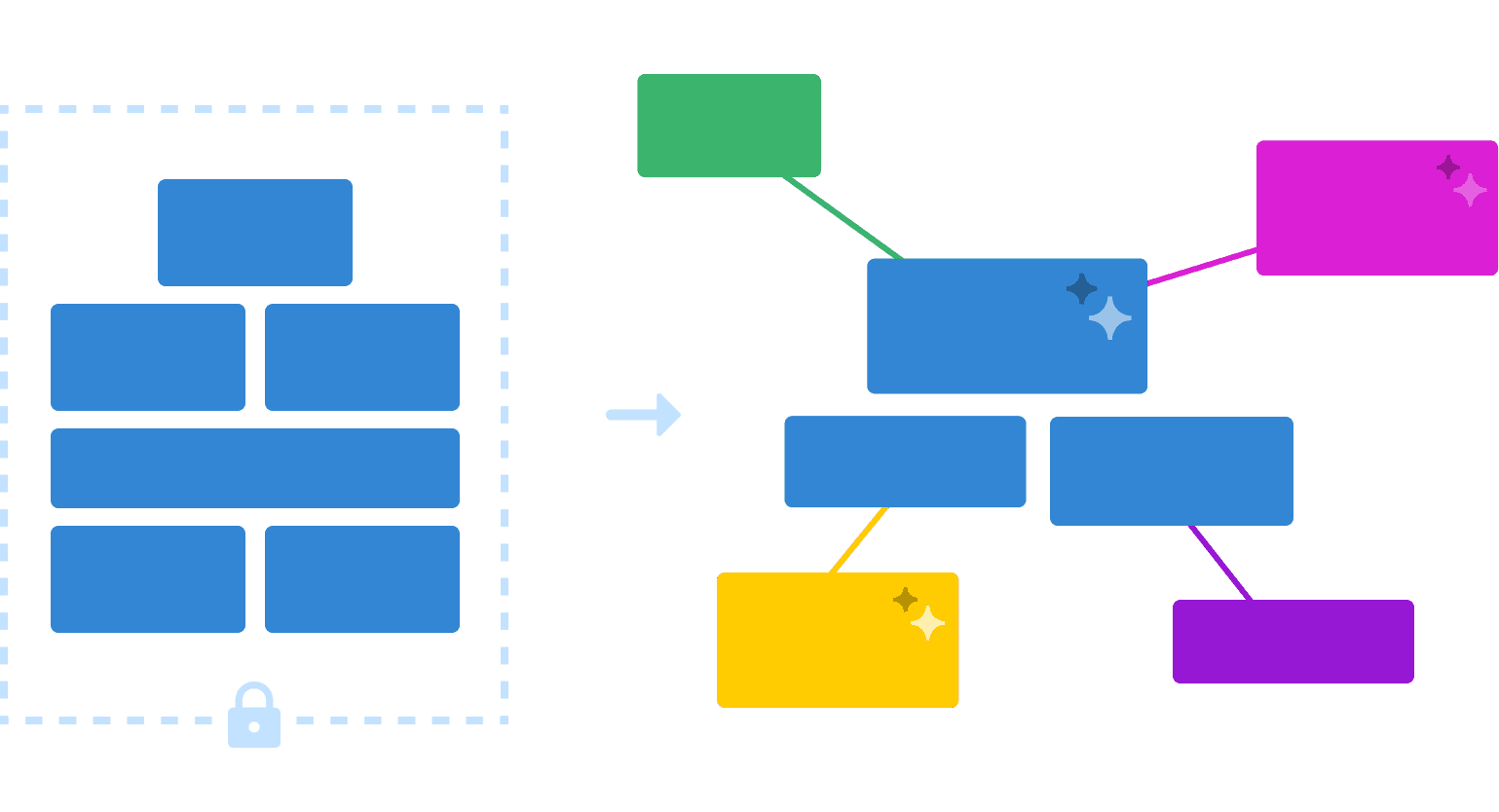
The risk is when your core digital experience is built inside an all-in-one platform that bundles everything into a single tightly-coupled system.
When that's your foundation, you inherit someone else's constraints. Their pricing decisions. Their product roadmap. Their technology choices. And critically, their AI strategy.
Tightly-coupled platforms are structurally disadvantaged when it comes to AI. They can't easily integrate new AI services, swap in different models as the landscape evolves, or let you experiment without system-wide risk. You end up dependent on your vendor's AI roadmap. You get AI features when they decide to ship them, at the pace they determine. If their strategy doesn't align with your needs, you're stuck waiting.
And as AI agents increasingly interact with systems through APIs rather than user interfaces, platforms that don't expose their capabilities openly become bottlenecks rather than enablers.
The switching costs that once protected these vendors are eroding. Not disappearing, but eroding enough that the strategic calculus is shifting.

Buy the best, build what matters
The answer isn't to build everything yourself. It's to use the best available tools for the jobs they're designed for, and build the parts that are unique to your business and your customers.
This means bringing in best-of-breed tools where they genuinely add value (content management, authentication, search, marketing automation, payments) while maintaining ownership of the experience layer and the way everything connects. When a better option emerges, you swap the component, not the entire platform.
This gives you the flexibility to evolve. In a landscape where AI capabilities are changing monthly and customer expectations are shifting just as fast, the ability to swap components in and out without rebuilding the whole system is a real advantage. And that flexibility extends well beyond AI.
Building custom is no longer the risk it used to be
The traditional obstacle to purpose-built solutions has always been cost and risk. Too expensive, too slow to deliver, too hard to maintain.
That equation is rapidly shifting.
Agentic AI development tools are changing how software gets built. Developers using AI-assisted tools are reporting significant performance improvements. But it's not just about speed. AI can now generate comprehensive test suites, automated compliance checks, and security scanning as part of the development workflow. The layers of testing and validation that used to be expensive and time-consuming can be baked in from day one.

This isn’t right for every situation. Building great software still requires thoughtful design architecture, experience and discipline, and AI hasn't changed that. But for the components that matter most, the ones that directly shape your customer experience or form part of your core value proposition, the build-vs-buy calculus has well and truly changed. When you factor in long-term licence savings, the total cost of ownership for a well-architected solution is increasingly competitive.
Owning the foundations and the future it unlocks
Cost and flexibility are compelling on their own. But the most important reason is the future it unlocks.
When you control your APIs, your data layer and the way your tools work together, you're not waiting on a vendor to add AI capability. You integrate it on your terms, at your pace. And then there's your data. Your customer relationships, your operational intelligence, this is your IP. When that data lives inside a third-party platform, you don't fully control it. You're subject to their data models, their export limitations, and their commercial incentives. Retaining full ownership of your data layer means you decide how it's structured, how it's used, and who has access to it. That autonomy becomes even more critical as AI makes data the primary input for competitive advantage.
Emerging standards like Model Context Protocol (MCP) are enabling AI systems to interact naturally with tools and data sources, facilitating natural language interfaces that make products more intuitive. But this only works if your architecture is open and API-first. If your stack is a closed system, you're a passenger, moving at whatever speed your vendor sets.
The organisations that own their digital foundations will be the first to deliver AI-powered experiences. They'll integrate capabilities incrementally, experiment with new interaction models, and evolve their products at the pace the market demands, not at the pace their platform vendor allows.
Start building now
The signal is clear. The organisations that start owning their digital foundations now, choosing genuinely open tools, building what's unique to their business, and positioning for AI integration, will have a real advantage.
You don't need to do everything at once. Start with your most constrained system or your most impactful customer touchpoint. Break it down. Validate the approach. Then evolve from there.
The foundations you build now will determine how quickly you can move in the years ahead. The question isn't whether AI will reshape your digital products. It's whether you'll be in the driver's seat when it does.
If you're evaluating your digital architecture or exploring how to give your organisation more autonomy over its digital products, I'd love to chat.